
Working side by side with young people and local families through iPlanner Tech Hub across Anambra State, I see the everyday struggles our people face. Over time, one thing has become crystal clear to me: no community can build a bright, tech-driven future when its foundational strength is youth being worn down from within, especially to our Obizi youth.
Real progress goes way beyond setting up computer labs, teaching digital skills, or expanding internet coverage. True development starts with keeping the people who will run that future healthy, safe, and focused.
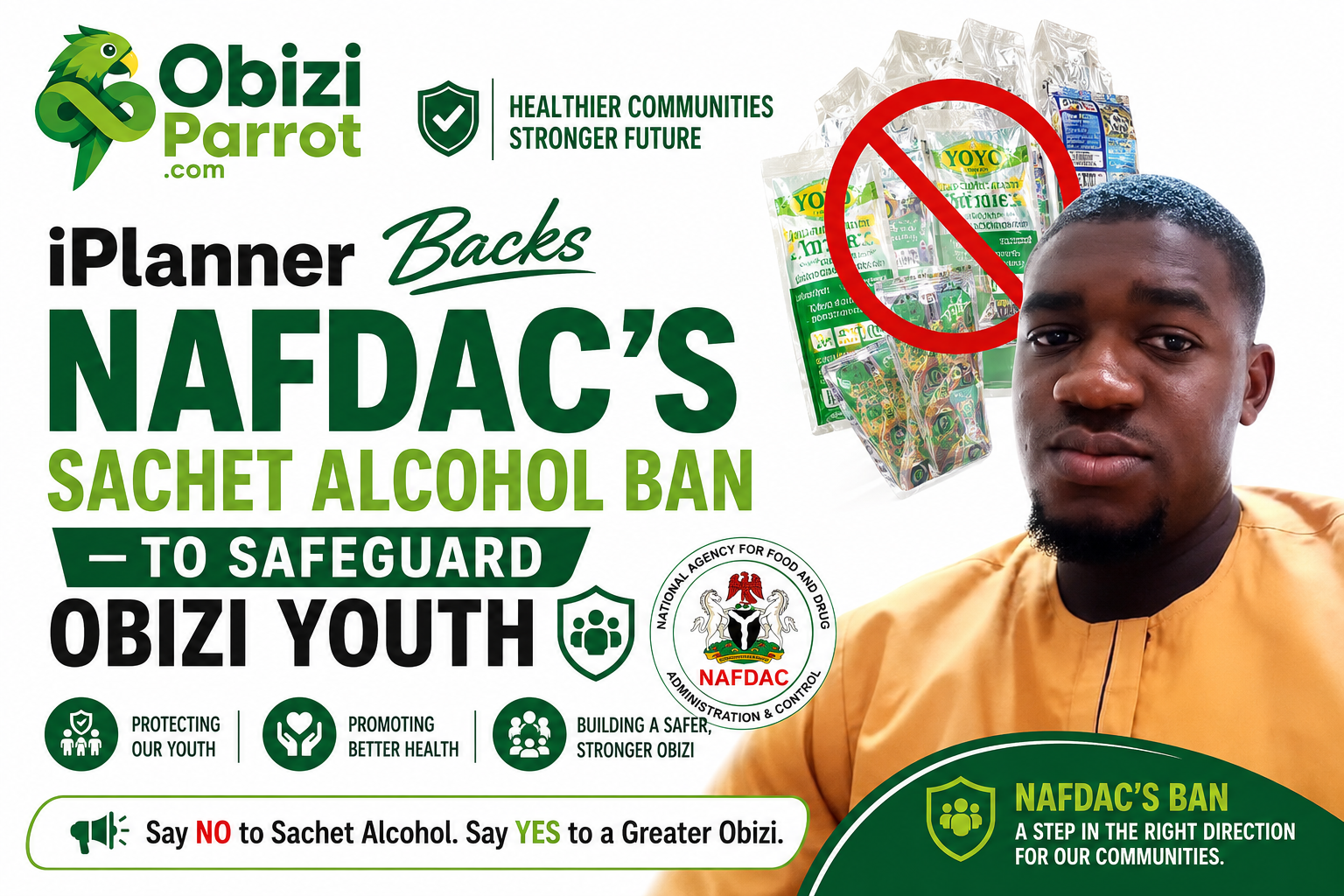
That is why I am stepping out today to voice my total support for the government’s complete ban on sachet alcohol and mini PET bottles under 200ml. At the same time, I want to give massive credit to the National Agency for Food and Drug Administration and Control (NAFDAC) for taking the bold step to sweep these harmful products off our streets once and for all.
The Hard Reality in Our Local Villages, Obizi Youth
If you want to see why NAFDAC had to step in, you don’t need to look far. Just take a short walk through our own backyards. Across the towns that make up the Obizi clan, Mbaukwu, Nibo, Nise, Amawbia, Isiagu, and Umuawulu, a very dangerous habit has taken over our daily routine over the last ten years. It is a trend that is silently breaking up homes, ruining bright young minds, and dragging down our local economy.
If you walk past those tiny neighborhood corner shops (what we all call shop Ógbé) in Amawbia or Nise early in the morning, you will witness a painful sight. Long before the sun comes up, many adults are not gathering to pray, plan their business for the day, or eat a good meal. Instead, a lot of people start their morning with what has become known locally as “morning devotion” knocking back shots of heavy, concentrated spirit drinks sold in cheap nylon sachets or tiny plastic bottles.
Look at hard-working men like Papa Amara, a commercial bus driver getting ready for his first morning trip. He stops by a shop Ógbé in Mbaukwu to gulp down two sachets of “hot” before putting his keys in the ignition.
A few miles away in Umuawulu, Mama Mmesoma, a petty trader setting up her counter, buys a small PET bottle to “warm her chest” and cure a morning cold before attending to her first buyer. In Nibo and Isiagu, young boys hanging around street corners spend their last 100 naira buying rounds of alcohol sachets to pass around.
In the past, taking a drink was something reserved for elders at traditional weddings, title ceremonies, or late-evening relaxation. Today, because big companies decided to package hard liquor into cheap, pocket-sized satchels, it has turned into an all-day addiction.
A young boy can easily slip three sachets into his school trousers without anyone noticing, completely stripping away the boundaries that used to keep hard drink far away from children.
The True Cost to Our Families and Future
Selling strong spirits in tiny nylon bags is not just regular business; it is a full-blown community crisis. The damage touches every corner of our lives:
1. Robbing Obizi Youth
Our biggest worry must be for the teenagers growing up in Mbaukwu, Nibo, Nise, Amawbia, Isiagu, and Umuawulu. Because sachet liquor is so cheap and easy to hide, school children buy it right under the noses of teachers and parents. They slip them into their school bags, drink them behind classrooms, and show up to lessons intoxicated. Early exposure to heavy alcohol damages young brains, destroys academic focus, and leads straight into lifelong addiction before these kids even turn twenty.
2. Turning Our Roads into Danger Zones
When drivers like Papa Amara stop at a shop Ógbé for a fast morning drink before loading passengers, everybody on that road is in danger. We all know that drunk driving is one of the biggest killers on Nigerian roads today. Wiping out these pocket-sized drinks takes the temptation away from drivers who are about to take the wheel.
3. Ruining Health and Draining Family Savings
Pouring strong, cheap spirits into an empty stomach every single morning destroys the human body fast. Doctors keep warning us that this habit leads straight to damaged livers, ruined kidneys, heart problems, and painful stomach ulcers. When the person bringing money home in a family falls sick from alcohol abuse, the whole household suffers spending their hard-earned savings on medical bills and sinking deeper into poverty.
”We cannot build a forward-thinking digital economy or an empowered Obizi youth workforce if our young people are being exposed to easily accessible, low-cost alcohol addiction. Public health must always take precedence over short-term corporate gains.” — Comrade Nweke Nnamdi
Standing Behind NAFDAC’s Action
The enforcement operation NAFDAC is carrying out across the country right now takes real courage, and it is a move that was long overdue.
For a long time, critics argued that stopping sachet alcohol would hurt company profits. But good governance means putting human lives ahead of quick money. What many people forget is that back in 2018, the government, health experts, and alcohol distillers all sat down and agreed on an 8-year timeline to phase out these small packages. Manufacturers were given plenty of time to retool their factories and move back to standard glass bottles or bigger containers above 200ml.
By raiding distribution hubs, major markets, park joints, and local stores to seize these banned items, NAFDAC is proving that laws in Nigeria can actually be enforced. On behalf of iPlanner Tech Hub and our whole team, I want to say a big thank you to the management and enforcement staff at NAFDAC for holding their ground.
What We Must Do in Our Own Towns
Government enforcement alone will not solve this problem overnight; we have to take responsibility in our own homes, streets, and town halls. To make sure this ban actually works across the Obizi communities, here is how we can all play our part:
- Local Leaders Must Lead the Charge: The traditional rulers, town union executives, age grades, and youth leaders in Mbaukwu, Nibo, Nise, Amawbia, Isiagu, and Umuawulu need to take this up personally. Town halls should organize meetings to inform local shop owners about the ban and warn them against selling these items. When our local leaders speak with one voice, people listen.
- Helping Shop Ógbé Owners Transition: We know small shop owners like Mama Mmesoma rely on daily sales to feed their families. But stopping sachet alcohol does not mean closing down shop. Store owners can easily swap out banned drinks for healthy options—like local fruit juices, malt drinks, milk, and basic household groceries that bring real good to the community without destroying lives.
- Reporting Illegal Sales: Keeping our environment clean takes eyes on the ground. If you see people secretly mixing, packing, or offloading truckloads of sachet alcohol anywhere in your neighborhood, report them directly to the nearest NAFDAC office or call their free hotline at 0800-1-623322.
Frequently Asked Questions (FAQs)
Why did NAFDAC ban sachet alcohol and small PET bottles?
NAFDAC banned these products because their extremely low price and small size made hard liquor easily accessible to underage children, commercial drivers, and students. The main goal is to curb alcohol abuse, lower road accidents, and prevent long-term health problems in our communities.
Is all alcohol completely banned in Nigeria now?
No. The ban applies specifically to hard spirits and liquor packaged in sachets and small PET bottles under 200ml. Alcohol packaged in standard glass bottles or larger containers above 200ml remains legal for adult purchase and consumption.
Did NAFDAC give alcohol manufacturers enough time before enforcing this ban?
Yes. An official agreement was reached in 2018 between NAFDAC, the Federal Ministry of Health, and distillers’ associations to phase out sachet alcohol over an 8-year period. Manufacturers were given years of notice to adjust their production and packaging lines.
How does this ban affect small village shops (shop Ógbé)?
Small shop owners are required to stop stocking and selling sachet alcohol immediately. To keep their businesses going, shop owners are advised to restock their shelves with safe consumer goods, non-alcoholic beverages, and everyday household provisions.
What should I do if I see people still selling or producing sachet alcohol?
You should report the location or business directly to the nearest NAFDAC office or call NAFDAC’s official toll-free hotline at 0800-1-623322.
Conclusion: Building Human Value First
Comrade Nweke Nnamdi is the CEO of iPlanner Tech Hub, and also the publisher of Obizi Parrot Media, our goal goes far beyond teaching people how to code or run digital campaigns, how to print NIN or how to register your voter card online. We are dedicated to building a society where people are healthy, strong, and clear-headed enough to invent, build, and lead.
A clear mind and a healthy body are the first things you need before you can learn a skill or run a successful business. By clearing sachet alcohol off our streets, motor parks, and village counters, NAFDAC is giving our young people a real fighting chance.
I stand 100% with NAFDAC on this enforcement drive, and I urge everyone in Mbaukwu, Nibo, Nise, Amawbia, Isiagu, Umuawulu, and across Nigeria to support this move for the safety, health, and dignity of our people.
To gain deeper context on how this policy impacts public health and local commerce, you can watch this report on the NAFDAC Ban On Sachet Alcohol Debate. It provides a great overview of the national conversation around regulation, consumer protection, and community safety.